Food Allergy Friday Newsletter from Dr. Alice Hoyt
Hi there!
Did you hear the buzz? AAP's Pediatrics published the article "Guidelines for Early Food Introduction and Patterns of Food Allergy."

What this study showed…
Peanut allergies have DECREASED since the LEAP Study, specifically after the LEAP Study prompted the consensus statement for multiple professional allergist societies to recommend early introduction in 2015.
Peanut allergies have DECREASED since the NIAID updated its guidelines so they then recommended early introduction in 2017.

What really is “early introduction”?
Shame on us as allergists - the term “early introduction” really isn’t a great description of what happened in LEAP and what we really mean by early intro.
In LEAP, a baby-appropriate peanut food - like Bamba or diluted peanut butter - was fed:
-
Earlier than was the norm in most developed countries (so as early as 4 months of age whereas many developed countries still carried antiquated concepts of delaying introduction of commonly allergenic foods in hopes of preventing problems) and,
-
Was fed often (multiple times per week).
All this suggests that a better name for “early introduction” would be “earlier incorporation” of peanut into the baby’s diet.
Soooooo “early introduction” really means feeding babies allergen (like peanut) starting around 4 months of age (or sooner if the baby is ready!) and feeding the food often, both of which help reach the immune system to tolerate the food.
Read more about early introduction in this earlier newsletter Peanut Prevents Peanut Allergy.
It’s great to have numbers that tell the story that feeding babies developmentally-appropriate peanut early and often has saved many families from living with peanut allergies!
In your practice...
How are you helping your youngest patients NOT develop peanut allergies? Remember, it is safe to incorporate commonly allergenic foods as complementary foods, and this can be done as soon as the baby is physically and developmentally ready, i.e. has head control, sits up well, is interested in eating, etc. - you know the drill!
And early intro does NOT interfere with breastfeeding either.
Also, in your higher risk babies (like kiddos with eczema) who are not quite ready to start eating foods, they may benefit from mixing peanut powder and other allergens into their bottles.
I talk all about this and so so so much more in my CME-accredited course Feeding Babies to Prevent Food Allergies (5 hourse of CME!). I also included an MOC Part 4 guide so you can apply what you learn to create a QI project for early intro and apply to ABP for MOC Part 4 credit. And, of course, I’m always just an email away for your questions and tough cases.
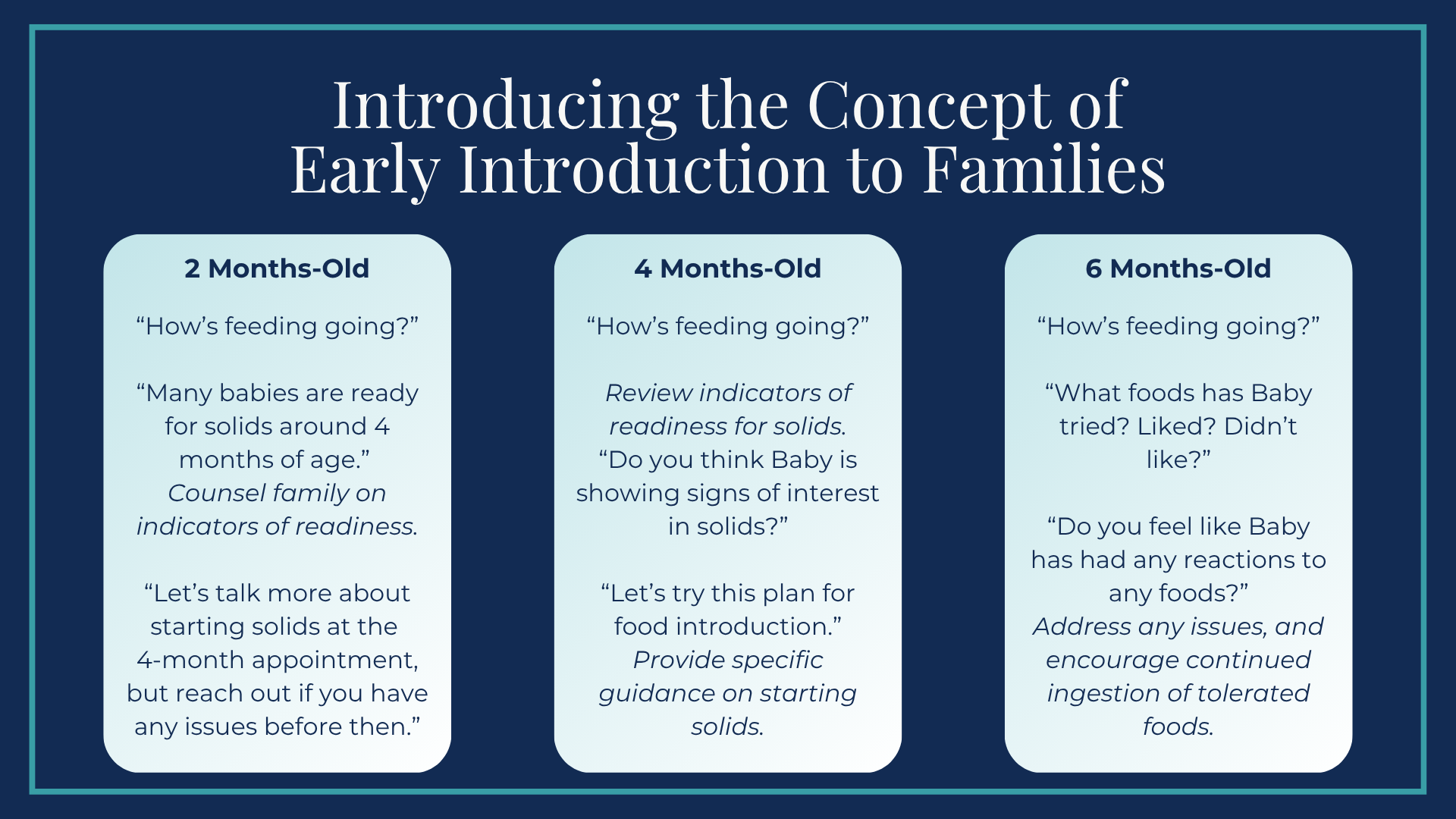
Here’s a screenshot of the timeline I teach pediatricians for when/how to discuss feeding babies…
Questions about food allergies?
Reach out! Simply click reply and send me your question. 📨
Alice
'Food Allergy Friday' is curated and written by Dr. Alice Hoyt. Dr. Hoyt is board-certified in allergy & immunology, internal medicine, and pediatrics. Her clinical expertise is in food allergies, and she serves patients with her team at the Hoyt Institute of Food Allergy.
Share this newsletter! Simply forward it to a colleague. 👍 And they can visit foodallergypedshub.hoytallergy.com